Table of contents
1
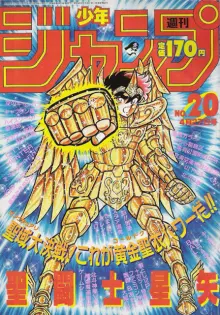
Seinto Seiya · 聖闘士星矢 Saint Seiya debuted in Weekly Shōnen Jump issue 890 on December 3, 1985. Created by Masami Kurumada, the series follows the Bronze Saints, young warriors who fight for the goddess Athena wielding sacred armors called "Cloths." Saint Seiya was hugely popular in Europe and Latin America, where it remains a beloved classic to this day.
2
JoJo's Bizarre Adventure debuted in Weekly Shōnen Jump issue 940 on December 2, 1986. Created by Hirohiko Araki, it spans multiple generations of the Joestar family across different time periods and settings. With over 950 chapters divided into 9 parts, JoJo is one of the longest-running manga in Shōnen Jump history and is celebrated for its unique art style and iconic fashion references.
3
Hokuto no Ken · 北斗の拳 Fist of the North Star (Hokuto no Ken) debuted in Weekly Shōnen Jump issue 777 on September 13, 1983. Written by Buronson and illustrated by Tetsuo Hara, the series is set in a post-apocalyptic world and follows the legendary martial artist Kenshiro. The iconic phrase "You are already dead" (Omae wa mou shindeiru) originated in this series and became one of the most famous catchphrases in manga history.
4
Yūrei Kozō ga Yatte Kita! (pilot one-shot, the one-shot was given the cover while their main series Kinnikuman was just ending...Yūrei Kozō returned as a short series a few months later)
5
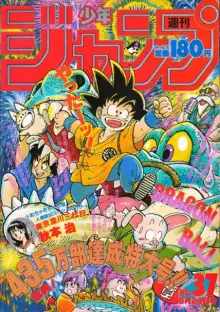
ドラゴンボール Dragon Ball is one of the most influential manga series ever created. Debuting in Weekly Shōnen Jump issue 838 on November 20, 1984, Akira Toriyama's masterpiece follows Son Goku from his childhood adventures to becoming the greatest martial artist in the universe. With 42 volumes and 519 chapters, Dragon Ball shaped an entire generation of manga and anime worldwide.
6
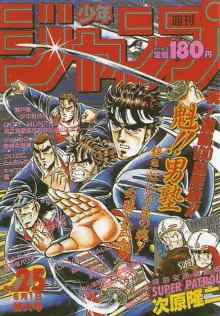
Sakigake!! Otokojuku · 魁!!男塾 Sakigake!! Otokojuku debuted in Weekly Shōnen Jump issue 859 on April 27, 1985. Created by Akira Miyashita, this over-the-top martial arts comedy is set in a school for delinquents that trains them through brutal and absurd challenges. The series became a cult classic of 1980s shōnen manga, known for its extreme parody of macho culture.
7
Kenritsu Umisora Kōkō Yakyū Buin Yamashita Tarō-kun
Ch. 16
8
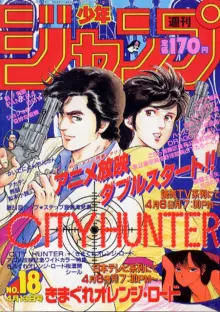
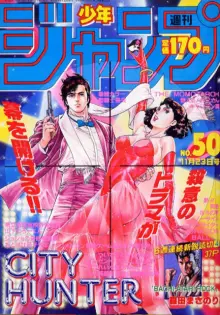
Shitī Hantā · シティーハンター City Hunter debuted in Weekly Shōnen Jump issue 850 on February 26, 1985. Created by Tsukasa Hojo, the series follows Ryo Saeba, a cool-headed "sweeper" (hired gun and bodyguard) in Shinjuku, Tokyo, whose deadliness is matched only by his lecherous personality. City Hunter became a classic of 1980s manga with a long-running anime adaptation and enduring popularity in Europe.
9
Tsuide ni Tonchinkan
Ch. 106
10
Hai Sukūru! Kimengumi · ハイスクール!奇面組
High School! Kimengumi
Ch. 252
11
Kyaputen Tsubasa · キャプテン翼 Captain Tsubasa debuted in Weekly Shōnen Jump issue 648 on March 31, 1981. Created by Yoichi Takahashi, the series follows Tsubasa Ozora, a boy whose dream is to win the FIFA World Cup. Captain Tsubasa is credited with inspiring a generation of professional footballers worldwide, including many current and former stars.
12
Pankra Boy
Ch. 7
13
KochiKame debuted in Weekly Shōnen Jump issue 387 on June 22, 1976. Created by Osamu Akimoto, this comedy series about a bumbling police officer ran for an extraordinary 40 years without interruption, amassing 200 volumes and 1,960 chapters — making it one of the longest-running manga series ever.
14
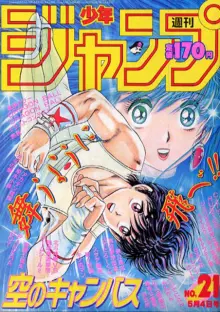
Sora no Kyanbasu · 空のキャンバス
Sora no Canvas
Ch. 37
15
Kimagure Orange Road
Ch. 134
16
Akaten Kyōshi Nashimoto Kotetsu
Ch. 18
17
Kinnikuman debuted in Weekly Shōnen Jump issue 544 on May 1, 1979. Created by the duo Yudetamago, the series follows Suguru Kinniku, a bumbling superhero who becomes a wrestling champion. Known for its wild characters and parody humor, Kinnikuman was enormously popular in the 1980s and spawned numerous sequels.
18
Star Bakuhatsu
Ch. 16
Load more
✕
📣 What Shueisha says about
Official promo for this issue · shonenjump.com (machine-translated)
Other issues
Which Jump came out the day you were born? Pick your date and see its cover, its series and what was happening that week. Find my Jump
Sources: series info and covers from jump.fandom.com ;
official issue cover and synopses from shonenjump.com
(Shueisha);
volume covers from ComicVine .
 ES